In this article we continue introducing useful materials and terms related to scrapbooking. Here you will find explanations of the most common concepts, descriptions of popular techniques and materials, and learn which tools and tricks can add variety to your creative projects. It is a scrapbooking glossary that will come in handy for beginners and experienced crafters alike.
Acid free
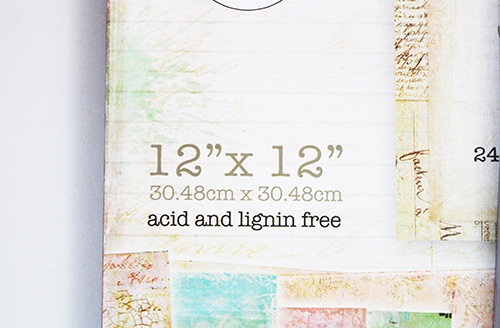
The term "acid free" (Acid Free) means that the material has a pH of 7.0 or higher. During manufacturing, the acid is removed from the paper, which significantly slows down the aging process. In photo albums made for long-term keeping, it is important to use acid-free materials, because they do not break down the paper and do not cause photos and colored elements to fade. Acid-free materials let you keep your scrapbook projects for many years so that future generations can enjoy them too, because that is the main goal of scrapbooking: to preserve memories beautifully for yourself and for your descendants.
Border
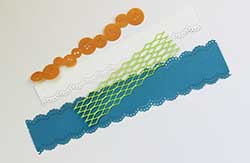
A border - is a decorative element in the form of a strip with straight, shaped or lacy edges. Borders are used to frame photos (usually on one or several sides) or to create vertical or horizontal lines when the page layout calls for it. Some manufacturers include border sets in their paper collections, so scrapbookers do not have to look for border elements that match the paper. Borders can be made of paper, fabric or chipboard. Strips of decorative washi tape or long paper die cuts made with a die-cutting and embossing machine can also be used as borders.
Border punch
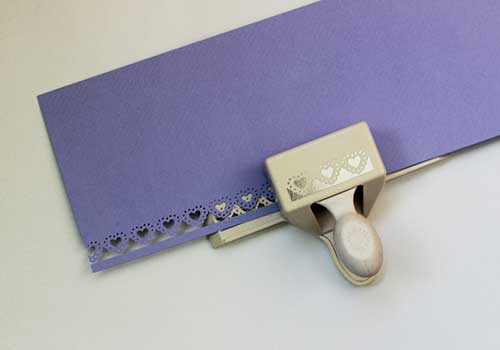
A border punch or edge punch is a type of punch used to create shaped, lacy edges on a page. The convenience of a border punch is that, by moving the paper along step by step, you can create a continuous repeating pattern along the whole edge. This is also an advantage of border punches over cutting and embossing dies, because with dies the length of the border you can cut is usually limited by the length of the die.
Brads
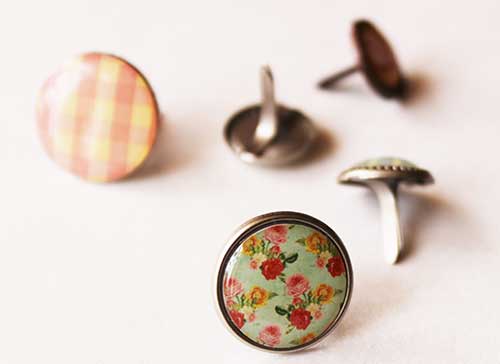 Brads (brad embellishments, brad accents) are decorative fasteners that look like small nails. A brad consists of a decorative head and two flat metal prongs that bend open. Brads are very easy to use: push them through a hole in the paper (you can make the hole with an awl or a needle), turn the sheet over and bend the prongs apart in opposite directions on the back. Brads can join several elements together or attach them to a page. They are often used as flower centers and to attach ribbons, strings, twigs and so on. The brad's construction lets elements move, which is very important when working with photo anchors or moving tags that hide journaling or an extra photo underneath.
Brads come in various colors and shapes, with metal, epoxy, plastic and fabric heads.
Creasing
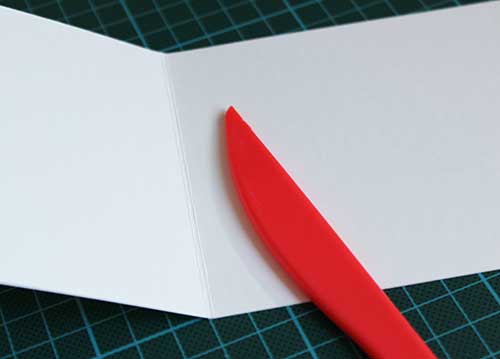 Creasing is pressing lines into thick paper using special tools, a bone folder or scoring stylus and a scoring board, or using things you have at hand: a knitting needle, a dried-up ballpoint pen and a ruler.
A crease line is usually needed for folding paper (for example, when making a card base). Sometimes creasing is simply a decoration in itself (embossed lines around the edge of a photo mat).
Die cuts
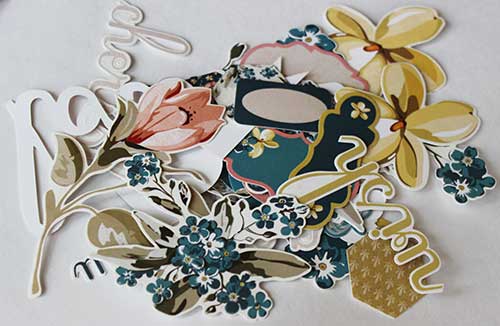 Die cuts are a type of scrapbooking embellishment: a shaped, cut-out picture. Die cuts can be sold on a sheet of cardstock or paper with perforation around the edge; in that case, just press lightly on the picture or shape with your fingers and it pops out of the sheet. Die cuts can also be sold already cut out in special packaging. And, conversely, some manufacturers sell die cuts as pictures printed on a sheet of paper that you have to cut out yourself.
It is also very common now to make die cuts or shaped cut-outs at home using a die-cutting machine and cutting and embossing dies. With a machine and a die you like, you can cut as many identical die cuts as you need.There are also various ways to decorate die cuts, from coloring, tinting, aging (distressing) and tearing the edges to embossing and applying glitter, Glossy Accents or crackle.
Embossed paper
Embossed paper (pre-embossed paper) is paper with a raised design. You can create such a design yourself using embossing folders. You can also buy embossed paper in scrapbooking stores.
Glitter
Glitter is a decorative material made of tiny shiny particles that creates a sparkling effect. It is used to decorate a page or individual elements. In scrapbooking stores you can buy glitter dry, as a spray, and also as part of a varnish or glue. Dry glitter sticks well to double-sided tape or to a surface thinly coated with PVA glue or clear varnish.
Glossy Accents
See Glossy Accents
Handmade paper
Handmade paper is paper made by hand, literally by human hands, and it usually has a rough surface with an uneven structure. Sometimes grass, leaf and flower inclusions are used as the pattern in this paper. It looks great in rustic and eco styles. The leader in making handmade mulberry paper is, without doubt, Thailand. Mulberry paper can be bought in craft stores and scrapbooking stores.
Heat embossing
Heat embossing (also called wet embossing) is a fairly advanced scrapbooking technique that lets you create unusual raised and textured effects. Heat embossing works like this:
- apply embossing ink to the stamp (just press the stamp onto an embossing ink pad)
- stamp the image
- sprinkle embossing powder over the impression; do this quickly, before the ink dries
- tip the excess powder off onto a sheet of paper and back into the jar
- heat the powdered image with a heat tool.
Instead of a stamp, you can draw a design or write with a special embossing pen. The result is a glossy image, or an image in gold or silver. This way you can also create a beautiful gold or silver inscription.
Notebook block
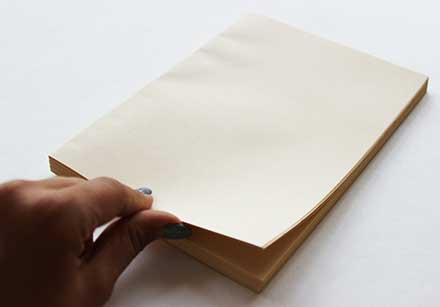
Notebook block is usually a set of paper sheets sewn together like a book, used as the inner part of handmade notebooks.
Blocks come in different sizes; the most common are A5 and A6. They can be white, cream or colored, as well as mixed (using paper of different colors in one block). "Aged" blocks are popular among fans of the vintage style: these are blocks sewn from sheets of paper that have been stained with tea or coffee beforehand.
You can make blocks yourself; all you need is office paper, a needle and thread, and glue. Keep in mind, though, that you will not get a perfectly even edge unless you take the pre-sewn blocks to be trimmed professionally. Many crafters also sell handmade blocks these days, so you can buy them in an online scrapbooking store.
Paper trimmer (paper cutter)
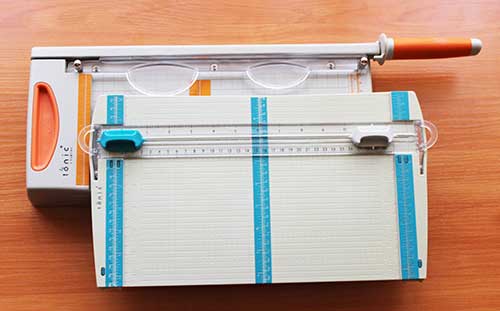
A paper trimmer (paper cutter) is a tool for cutting paper. It gives you a straight, accurate cut. A trimmer usually has measurements in centimeters or inches, so you can measure and mark the place of the future cut right on its work surface.
Trimmers come in rotary and guillotine (or blade-arm) types. A rotary trimmer works by pressing down so that a blade carriage moves along a rail and cuts through the paper. With a rotary trimmer you can cut a rectangular window in the middle of a sheet of paper or a card base, as well as a photo frame. A guillotine trimmer can cut several sheets at once and is a more powerful, simplified version of an industrial cutter, but it cuts straight through the paper from the top edge to the bottom, so you cannot cut a hole in the middle of a sheet with it. If you plan to cut a lot of paper, for example for card bases and wedding invitations, a guillotine trimmer is the right choice for you.
Photo safe
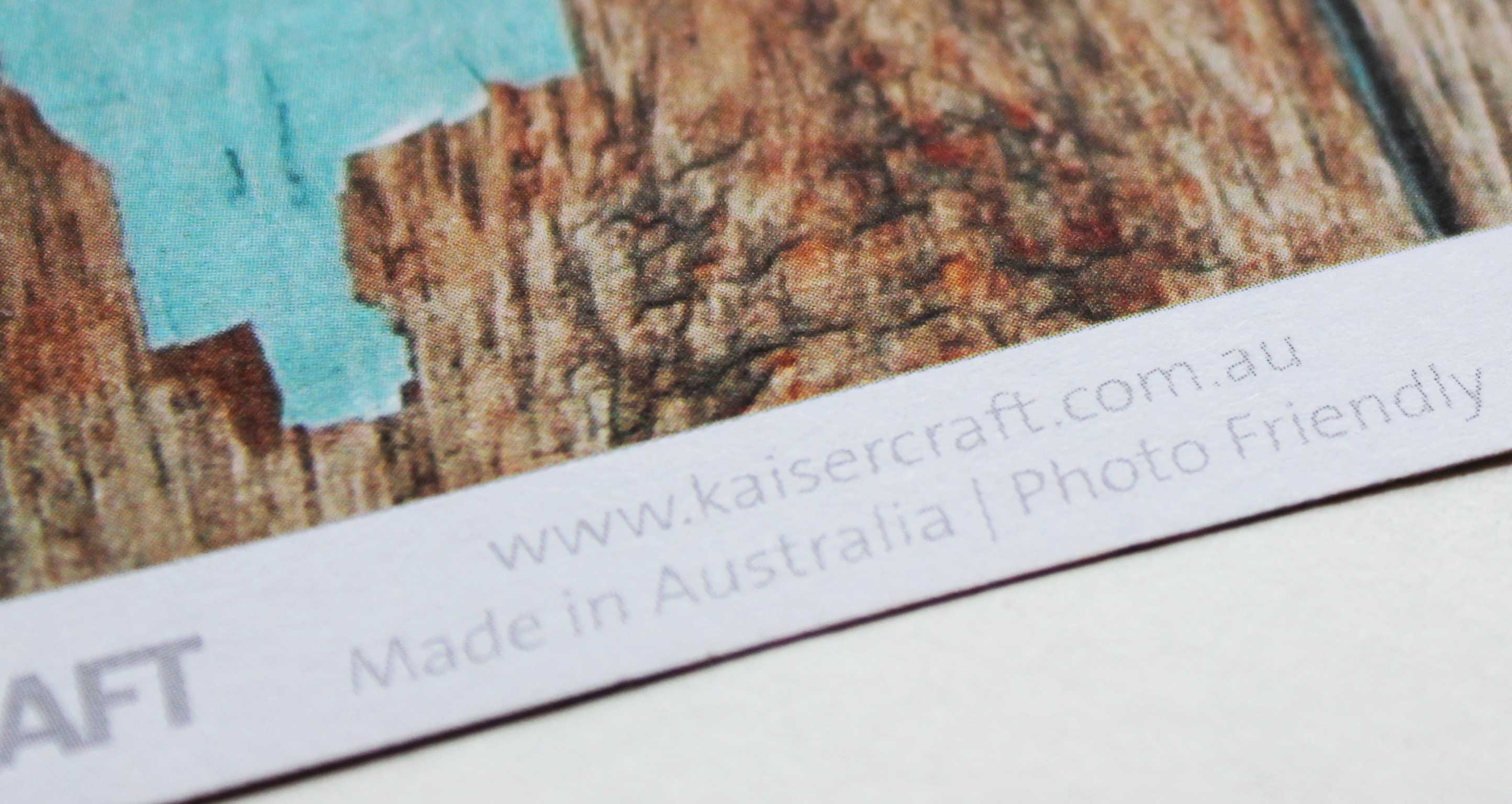
The term "photo safe" (also "photo-safe" or "photo friendly") describes a scrapbooking material and means the same as "acid and lignin free".
Scrapbooking paper
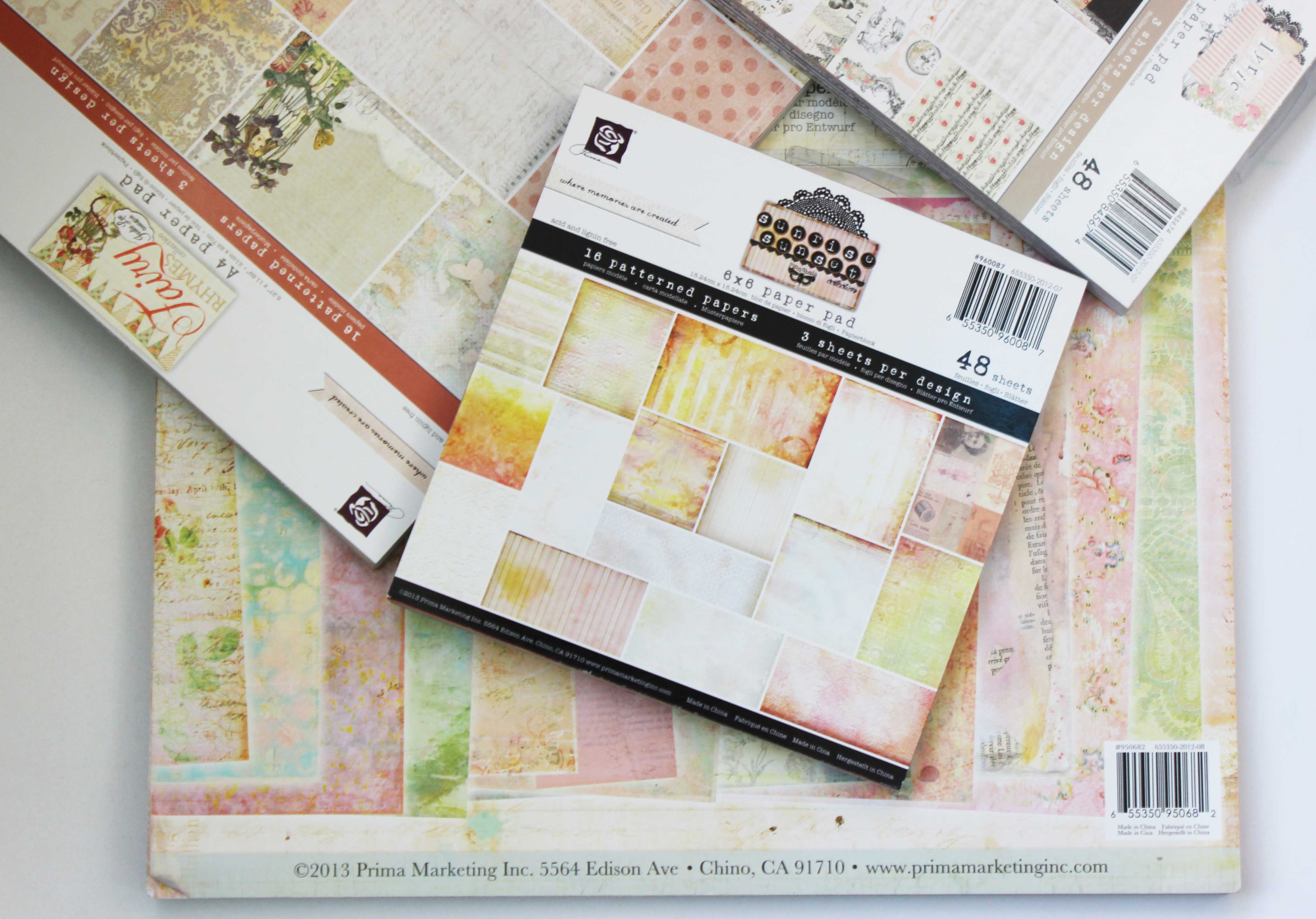
Scrapbooking paper (scrap paper) — is special paper made for use in scrapbooking. What makes it "special" is not so much its beautiful themed designs as the fact that it can be used to create albums and pages. This quality of scrapbooking paper comes from the fact that it is free of acid and lignin, so photos and other keepsakes that touch it do not lose their color or deteriorate. So even if at first it may seem that ordinary colored paper, colored cardstock or patterned designer paper will do for scrapbooking, later on, if you want your work to last for future generations, it is right to use scrapbooking paper that is acid free and photo safe.
Specialized scrapbooking paper is made in four main sizes:
- 30 x 30 cm (12 x 12 inches),
- 20 x 20 cm (8 x 8 inches),
- A4 (20 x 30 cm) (8 x 12 inches),
- 15 x 15 cm (6 x 6 inches).
The 30 x 30 cm (12 x 12 inch) format is the most common, because a sheet of this size can be used as an album page or, cut into several pieces, for making cards.
Scrapbooking paper comes in different weights, from thin (close to ordinary office paper) at 80 gsm to quite thick, resembling cardstock, at 200-300 gsm. The most common weight is around 180-200 gsm.
In scrapbooking stores you can buy paper in sets or by the single sheet. Manufacturers usually release paper in sets, which are commonly called "collections". The papers in a collection share the same texture or theme, and the sheets go together harmoniously in design and color. That is why beginners are advised to start with a collection: the paper designs and embellishments in it have already been professionally matched. Later, more experienced scrapbookers can combine not only sheets from different collections but also from different manufacturers to bring their own ideas to life. In that case, the option to buy sheets individually comes in handy.
Paper comes not only in different weights and sizes but also in different textures: velveteen paper, embossed paper, paper with glitter and glossy elements, paper with a linen or corduroy texture, and so on. And you could talk about scrapbooking paper themes for a very long time, because besides baby and wedding collections there are collections about school, seaside holidays and travel, and paper is often made in a particular style: vintage, shabby chic, etc.
Such a variety of scrapbooking paper lets even the most demanding crafters make their choice and find the right paper for their individual project. Paper is the fundamental material in scrapbooking: you can do without brads, eyelets, die cuts and other embellishments, but in traditional scrapbooking you cannot do without paper :).
Traditional paper scrapbooking
Traditional paper scrapbooking is a type of craft that involves working with real materials: paper, scissors, glue, and many embellishments and decorative elements. Unlike digital scrapbooking, traditional scrapbooking results in a three-dimensional handmade object.
Vellum (tracing paper)
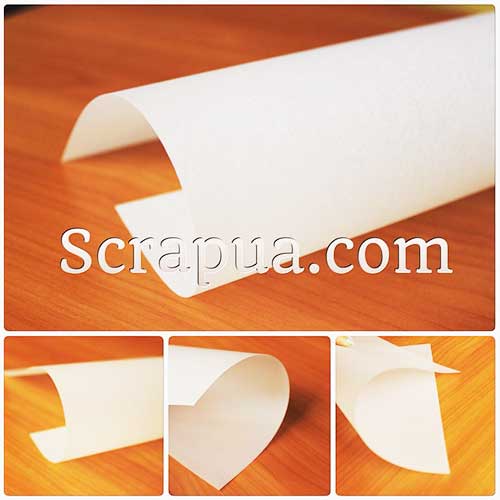 Vellum (tracing paper) — is thin transparent or translucent paper, white, colored or printed with a design.
Thanks to its transparency, vellum lets you create unusual effects in scrapbooking.
Vellum is often used as an overlay or as a base for journaling. You can also cut shaped die cuts from vellum and make decorative elements with it. It comes in different weights.
Velveteen paper
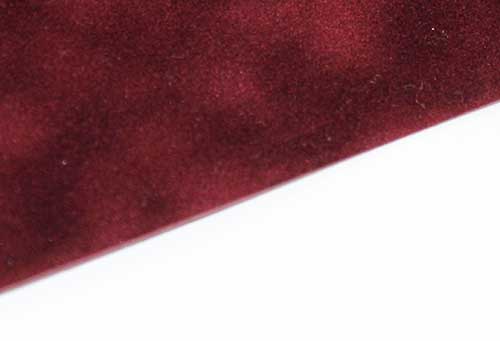
Velveteen paper (flock paper) is paper with a velvet-like fabric surface. The velvety effect can cover the whole sheet of paper or cardstock or only parts of it (elements), usually a design or pattern printed on the paper.
Vintage
Vintage is one of the most common styles in scrapbooking, a pseudo-antique style characterized by decor and embellishments that imitate old-fashioned and outdated things. You might use an old sheet of music, a scrap of an old book page, worn buckles and chains, or yellowed lace from grandmother's chest. This style is associated with a light brown color palette (beige, khaki, coffee shades, the color of antique metal) and completely excludes snow-white :)
Wax pencils
Wax pencils are soft pencils used in scrapbooking to tint pages and add color to photos. They are the safest option when made from good-quality plant wax, so they are often used in children's crafts. You can buy them in ordinary stationery stores, and they are also found in specialized scrapbooking stores.